1. ACTIVE AND PASSIVE SENTENCES
A sentence is written in active voice when the subject of the sentence performs the action in the sentence
Passive Sentences
Passive voice verbs are used in writing much more often than in speech, and they are used in some types of writing much more often than in others. Passives are used more in journalism (newspapers, magazines) than in fiction (novels, stories), but most journalists and fiction writers use far more active than passive sentences. However, passives are very common in all types of scientific and technical writing. Scientific articles often contain more passive than active sentences. You should not use passive voice verbs unless you have a good reason.
A. Relationship between active and passive:
1. The object of the active verb is the subject of the passive verb (“English” in the example sentences below). Therefore, verbs which cannot be followed by objects (intransitive verbs) cannot be used in passive voice. These are some common intransitive verbs: appear, arrive, come, cry, die, go, happen, occur, rain, sleep, stay, walk. These verbs cannot be used in passive voice.
2. passive verb always contains a form of the auxiliary verb be. The form of be in the passive verb phrase corresponds to the form of the main verb in the active verb phrase (see the underlined words in the example sentences below). That is, if the active main verb is simple present tense, then a simple present tense form of be is used in the passive verb phrase; if the active main verb is -ING, then the -ING form of be is used in the passive verb phrase; and so on.
3. The main verb in a passive predicate verb phrase is always the participle form of the verb.
4. Perfect progressive verb forms are generally used in active voice only. That is, these are good English sentences:
ACTIVE:They have been speaking English.
ACTIVE: They had been speaking English.
ACTIVE: They will have been speaking English.
But sentences like these are rarely used:
PASSIVE: English has been being spoken.
PASSIVE: English had been being spoken.
PASSIVE: English will have been being spoken.
B. Most passive sentences do not contain an agent; all active sentences contain an agent.
1. An agent is the subject of the active verb. In the example sentences above, the agent is “they” in all the active sentences; the passive sentences do not contain an agent.
2. When a passive sentence contains an agent, it is in a prepositional phrase following the verb. For example:
English is spoken by them.
In the following sentences, the noun “teachers” is the agent in both sentences. “Teachers” is also the subject of the active verb, but “exams” is the subject of the passive verb.
ACTIVE: Teachers prepare exams.
PASSIVE: Exams are prepared by teachers.
Example active
1. Anggy watch television
2. Yudi playing football.
Example passive sentences
1. Ball to kick by adhie
2. Noodle is cooking by ovie
1. ACTIVE
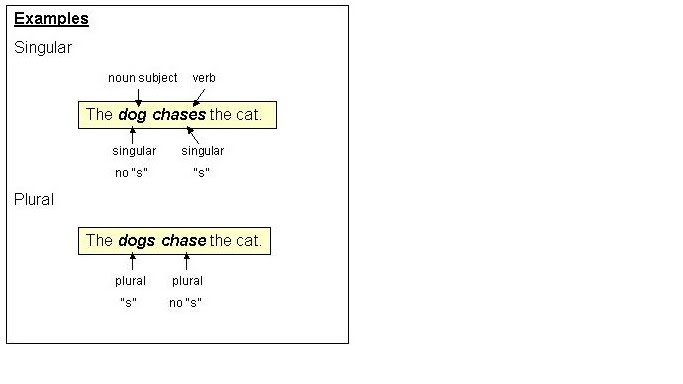
In active sentences, the thing doing the action is the subject of the sentence and the thing receiving the action is the object. Most sentences are active.
[Thing doing action] + [verb] + [thing receiving action]
2. PASSIVE
In passive sentences, the thing receiving the action is the subject of the sentence and the thing doing the action is optionally included near the end of the sentence. You can use the passive form if you think that the thing receiving the action is more important or should be emphasized. You can also use the passive form if you do not know who is doing the action or if you do not want to mention who is doing the action.
[Thing receiving action] + [be] + [past participle of verb] + [by] + [thing doing action.
(ACTIVE) I took the shirt yesterday
(PASSIVE) The shirt was taken by me yesterday
Example :
1. Player played the guitar
The guitar was played by player
2. They are building a nen ring-road round the city
A new ring-road is being built by round the city
3. Hundred of people visit the Washington Monument every day
The Washington Monument is visited by hundred of people every day
4. The woman is singing a song
A song is being sung by the woman
5. Waitresses and waiters serve costumer
Costumer is served by them
6. Our goverment develops good aducational system
Good educational syatem is developed by our goverment
7. They have changed the date of the meeting
Date of the meeting has been changed by them
8. Tiwi bouht some computers yesterday
Some computers were buoght by tiwi yesterda
2. ARTIKEL PASSIVE VOICE
Ralph earl was born into a connecticutfarm family in 1751. He closeearly to become a painter and looked for what training was available in his home state and in Boston. Earl was one of the first American artists to paint landscapa. Among his first painting were scanes from the Revolutionary War battles of Lexington and Concord. In 1778 Earl went to London to study with Benjamin West for four years.
When aerl returned to the United States, he was jailed for fourteen months for outstanding debts. While still a prisoner, he painted portraits of some of New York City’s most elegant society women and their husband. After his release, he took up the trade of itinerant portrait painter, working his way through southern New England and New York. Earl didn’t flatter his subjects, but his portraits show a deep understanding of them, perhaps because he had sprung from the same roots.
Among Earl’s most famous painting is his portrait of Justice Oliver Ellsworth and his wife, Abigail To provide counterpoint to the severity of the couple, he accurately details the relative lixury of tha Ellsworth’s interior furnishings. Tha view through the windowbehind them shows sunlit fields, well-kept fences, and a bend of the Connecticut River. One of earl’s painting is somethink of an anomaly. Reclining hunter, which for many years was attributed to Thomas Gainsborough, shows a well dressed gentleman resting beneath a tree. In the foreground, he displays a pile of birds, the result of a day’s hunt. Tha viewer can also a farmer’s donkey lying in the background, another of the hunter’s victims. This outrageously funny portrait couldn’t have been commissioned – no one would have wanted to be portrayed in such an absurd way. However, this painting uncharacteristically shows Earl’s wih as his uncommon technical skills.
Sumber: http://www.towson.edu/ows/activepass.htm
http://www.primaryresources.co.uk/english/active.htm
http://faculty.deanza.edu/flemingjohn/stories/storyReader$22